
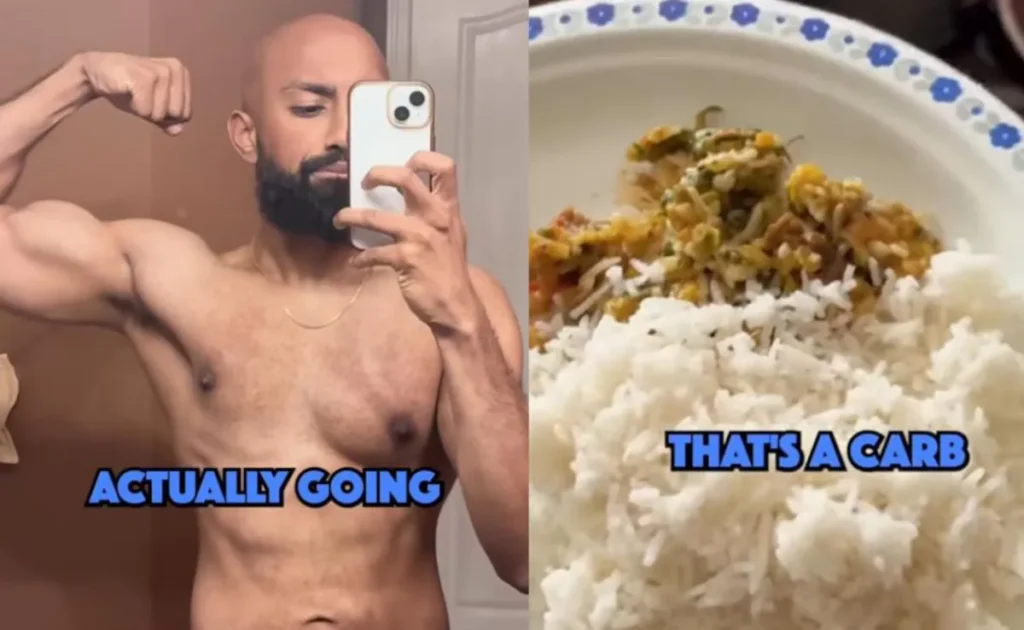
Tamil Diet for Weight Loss: For many people trying to lose weight, the hardest part is not exercise it’s food. More specifically, it’s the fear of giving up the foods they have grown up eating. Traditional diets are deeply tied to culture, family, and daily routine, making drastic dietary changes difficult to sustain. Challenging this common belief, fitness trainer Kagivan Prabaharan has shown that weight loss does not require abandoning cultural food habits. By making smart modifications to his Tamil diet, he successfully lost 22 kilograms and now proudly sports well-defined six-pack abs.
Kagivan recently shared his transformation story on Instagram, along with a powerful message that resonated with thousands. “I didn’t stop eating Tamil food. I stopped eating it like I was trying to stay overweight. 50 lbs heavier vs. six-pack. Same culture, different system,” he wrote. His approach highlights a key truth in sustainable fitness: it’s not about eliminating foods, but about changing the system around how you eat them.
Why Traditional Diets Are Often Blamed for Weight Gain
South Indian meals, especially Tamil cuisine, are often labelled as “too carb-heavy” for weight loss. Rice, sambar, rasam, poriyal, and curries form the backbone of everyday meals. Many people assume that to lose weight, they must completely remove rice and other familiar foods from their plates.
Also read: Chopped Broccoli & Chickpea Salad
Same Culture, Smarter System
What makes Kagivan’s transformation inspiring is its practicality. His journey proves that cultural foods do not need to be abandoned for fitness goals. Instead, what matters is:
- How much you eat
- How often you eat
- How well-balanced your meals are
By adjusting portions, increasing protein, and choosing nutrient-dense preparations, he created a system that worked for his body and lifestyle. He also emphasised that his clients have achieved similar results by following the same principles without feeling disconnected from their food traditions.
Read about: More Vitamins, More Problems? The Truth About Supplements
A Sustainable Lesson for Anyone on a Weight Loss Journey
Kagivan Prabaharan’s story serves as a reminder that long-term weight loss is not about extreme dieting or chasing trends. It’s about understanding your body, respecting your culture, and making informed choices.
For anyone struggling to lose weight while sticking to traditional Indian or Tamil food, his journey offers hope and clarity. You don’t need to fear rice, curries, or home-cooked meals. With the right structure and mindset, the same food that once contributed to weight gain can become a powerful tool for transformation.
FAQs About Tamil Diet for Weight Loss
1. Can I lose weight without giving up traditional Tamil food?
Yes. Weight loss depends on calorie balance, portion control, and proper meal composition, not on eliminating cultural foods. By adjusting portion sizes, increasing protein intake, and balancing carbs with vegetables and healthy fats, you can lose weight while still enjoying traditional Tamil meals.
2. Is rice the main reason for weight gain?
No. Rice itself is not the problem. Overeating, lack of protein, and overall calorie surplus contribute more to weight gain. When eaten in controlled portions and paired with protein-rich and fiber-rich foods, rice can be part of a healthy weight-loss plan.