

Despite High Awareness of Lp(a): Lipoprotein(a), commonly abbreviated as Lp(a), has steadily gained recognition over the past decade as a powerful and independent risk factor for atherosclerotic cardiovascular disease (ASCVD). Yet, despite growing scientific evidence and widespread clinician awareness, real-world testing rates for Lp(a) remain strikingly low particularly in the United States. A new clinician survey highlights a concerning gap between knowledge and action, raising important questions about how cardiovascular risk is currently assessed and managed.
High Awareness, Limited Action
According to a recent survey published in the American Journal of Preventative Cardiology, most clinicians practicing in the US acknowledge the clinical relevance of Lp(a). In fact, 81% of respondents identified Lp(a) as a significant cardiovascular risk factor, while 77% agreed it is a useful tool for cardiovascular risk stratification.
These findings align with a growing body of research demonstrating that Lp(a) is not merely associated with cardiovascular disease, but is a causal and genetically determined risk factor. Large-scale meta-analyses have shown a linear relationship between Lp(a) levels and cardiovascular event risk, both at baseline and among patients already receiving statin therapy. Some studies even suggest Lp(a) may be one of the strongest predictors of future cardiovascular events in patients with established ASCVD.
Also read: The Bad Food a Cardiologist Actually Recommends for Better Heart Health
Who Was Surveyed?
To better understand this gap, researchers conducted one of the most comprehensive surveys on Lp(a) perceptions to date. Working with a medical survey company, they distributed an electronic questionnaire to clinicians who had been practicing in the US for at least five years.
Selective Testing Over Universal Screening
Interestingly, while clinicians broadly recognize the importance of Lp(a), fewer support universal testing. Only 41% of respondents felt that all adults should be tested for Lp(a) at least once in their lifetime.
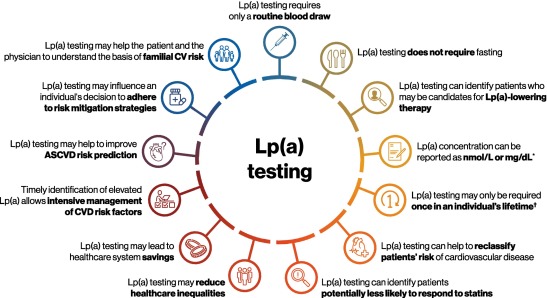
However, support for targeted testing was much stronger. Roughly 70% of clinicians believed Lp(a) testing is warranted in high-risk populations, including:
- Patients with premature cardiovascular disease
- Individuals with a family history of premature ASCVD
- Patients experiencing recurrent cardiovascular events
Read about: GLP-1RAs Linked to Reduced Haemorrhagic Stroke Risk
Opportunities to Improve Testing Rates
The authors also noted that system-level interventions could help bridge the current gap. Tools such as electronic health record (EHR) reminders, especially in pre-procedure or high-risk settings, have already shown promise in increasing Lp(a) testing rates.
Education campaigns, clearer consensus guidelines, and integration of Lp(a) into standard cardiovascular risk algorithms may further normalize testing in routine practice.
Conclusion
The survey highlights a paradox at the heart of modern preventive cardiology: Lp(a) is widely recognized as an important cardiovascular risk factor, yet remains vastly under-tested. Clinicians understand its value, particularly in high-risk populations, but face practical barriers related to guidelines, therapeutic uncertainty, and system-level inertia.
FAQ’s
1. Why is Lp(a) testing important if many clinicians already know about it?
Lp(a) is a genetically determined and independent risk factor for cardiovascular disease that is not detected in a standard cholesterol test.