





Pollution and Environmental Toxins: What if the air you breathe every day is silently increasing your risk of a life-threatening disease? In bustling Indian cities with heavy traffic, rapid urbanization, and industrial expansion, air pollution has emerged as a hidden but powerful risk factor for lung cancer. The 2025 report by the Centre for Research on Energy and Clean Air (CREA) highlights India’s persistent struggle with air quality, particularly high concentrations of fine particulate matter (PM2.5), which continue to exceed World Health Organization (WHO) safety guidelines.
For medical oncologists, thoracic surgeons, and public health specialists, understanding the connection between air pollution, environmental toxins, and lung cancer is more than academic—it is critical for guiding treatment, preventive measures, and policy advocacy. As lung cancer rates continue to rise among both smokers and non-smokers, examining the environmental factors behind this crisis has become essential.
This article explores how toxins in the air contribute to lung cancer development, the biological pathways involved, and what individuals, communities, and policymakers can do to safeguard lung health. By addressing this often-overlooked dimension of cancer risk, we can take steps toward healthier cities, better prevention strategies, and a cleaner future.
Air Pollution: A Hidden Threat
Air pollution is often described as a silent intruder, infiltrating the lungs and bloodstream without obvious signs until disease manifests. The fine particulate matter (PM2.5)—tiny particles released from vehicle emissions, industrial activities, construction dust, and biomass burning—is especially dangerous.
The International Agency for Research on Cancer (IARC), part of WHO, has classified outdoor air pollution and PM2.5 as Group 1 carcinogens—placing them in the same category as tobacco smoke and asbestos. Despite clean air initiatives across India, many cities still record PM2.5 levels several times higher than the safe threshold. This persistent exposure places millions at risk of developing respiratory and cardiovascular diseases, including lung cancer.
The Environmental Toxin–Cancer Connection
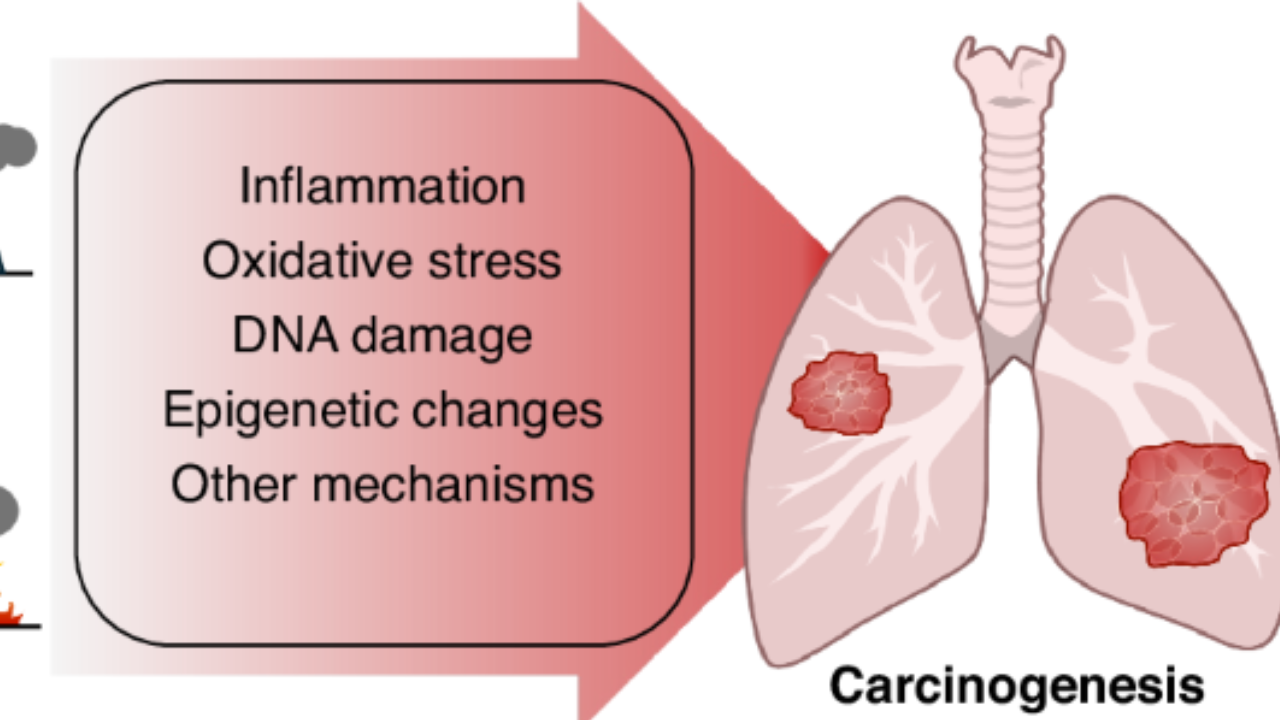
Exposure to pollutants and toxins does not merely irritate the lungs—it can initiate and accelerate cancer development. Pollutants like PM2.5, nitrogen dioxide, and sulfur dioxide trigger:
- Chronic inflammation in the lungs
- Oxidative stress leading to tissue damage
- DNA mutations that disrupt normal cell growth and repair mechanisms
Over time, these biological effects create an environment conducive to cancer. Importantly, air pollution-induced lung cancer occurs even in non-smokers, highlighting that lifestyle changes alone cannot eliminate the risk.
Indoor pollutants also play a significant role. In rural and semi-urban areas, biomass fuels like wood, coal, and kerosene, often used for cooking in poorly ventilated homes, expose women and children to toxic smoke daily. Occupational hazards, such as asbestos exposure, silica dust, and diesel fumes, further compound the risk for workers in construction, mining, and transportation sectors.
Pathways of Exposure
1. Urban Exposure
In Indian cities, vehicle exhaust, industrial discharges, and construction dust are the biggest contributors to PM2.5. These particles lodge deep into lung tissue and accumulate over years.
2. Indoor Exposure
In households dependent on biomass or kerosene for cooking, smoke inhalation in poorly ventilated kitchens significantly increases cancer risk. Non-smoking women in such homes are disproportionately affected.
3. Occupational Exposure
Workers exposed to silica, asbestos, or diesel fumes without protective gear face a higher risk of lung cancer. Many cases are underdiagnosed due to long latency periods.
Read about: Cupra Ateca Review: The SUV That Launched a Brand
Beyond Cancer: Other Health Impacts
Air pollution not only raises lung cancer risk but also worsens other health conditions. Chronic Obstructive Pulmonary Disease (COPD), asthma, recurrent infections, and cardiovascular complications frequently overlap with cancer symptoms, making diagnosis and treatment more challenging. According to the CREA report, PM2.5 even enters the bloodstream, damaging blood vessels and increasing the risk of heart disease and stroke.
Strategies for Mitigation and Prevention
Individual and Household Measures
- Cleaner Indoor Air – Ensure proper kitchen ventilation, use chimneys or exhaust fans, and shift to cleaner fuels (LPG, electricity).
- Limit Outdoor Exposure – Monitor the Air Quality Index (AQI), wear N95 masks on high-pollution days, and avoid strenuous outdoor exercise when smog levels are high.
- Adopt Smoke-Free Living – Avoid tobacco smoke, incense burning in closed spaces, and unprotected exposure to occupational dust and fumes.
Policy and Community Action
- Stronger Emission Norms – Strictly enforce vehicular and industrial emission standards.
- Urban Planning – Implement dust-control strategies, green buffers, and regulated industrial zoning.
- Cleaner Energy Transition – Accelerate renewable energy adoption and reduce reliance on coal.
- Health Monitoring – Regular health check-ups and lung screenings for high-risk populations.
Also read: Xpeng G6 Review: The High-Tech Chinese Electric SUV That Aims to Redefine Value
Conclusion: Cleaner Air, Healthier Lungs, Happier Lives
Lung cancer in India is not merely a disease of smokers—it is increasingly recognized as a disease of polluted environments. The toxic mix of PM2.5, industrial emissions, and household pollutants silently erodes respiratory health, often going unnoticed until cancer or chronic disease is diagnosed.
By recognizing environmental toxins as a major cancer driver, we shift the focus from individual blame to systemic action. This demands a multi-level approach, combining government policy, public health initiatives, and personal lifestyle adjustments.
Healthcare providers and oncologists must also integrate environmental risk assessments into cancer care—because prevention, in this context, truly is the best cure.
Ultimately, fighting air pollution is not just about improving visibility in our cities—it is about safeguarding life itself. With collective action, India can build a future of cleaner air, healthier lungs, and stronger generations.
FAQs
1. Can air pollution really cause lung cancer in non-smokers?
Yes. Studies show that air pollution, particularly PM2.5 exposure, can cause DNA damage, chronic inflammation, and mutations, leading to lung cancer even in people who have never smoked. In India, a growing number of non-smokers are being diagnosed with pollution-related lung cancer.
2. How does indoor air pollution affect lung cancer risk?
Indoor air pollution from biomass fuels like wood, coal, and kerosene exposes individuals—especially women and children—to toxic smoke daily. Prolonged exposure can significantly increase the risk of lung cancer and other respiratory diseases.
3. What are the main sources of air pollution linked to lung cancer?
The major sources include vehicle emissions, industrial discharges, construction dust, indoor cooking with biomass fuels, and occupational exposure to asbestos or diesel fumes.
4. How can individuals protect themselves from polluted air?
People can monitor AQI, wear N95 masks, ensure home ventilation, avoid smoking environments, and minimize outdoor activities on high-pollution days. Transitioning to cleaner fuels for cooking and heating also greatly reduces indoor exposure risks.
5. What policies can help reduce pollution-related lung cancer cases?
Policies that enforce stricter emission norms, accelerate clean energy adoption, regulate industrial zoning, and improve urban air monitoring are critical. Additionally, awareness campaigns and routine lung health check-ups can support early detection and prevention.