

Rising Global Childhood CKD Highlights Health Inequality Gaps: Chronic kidney disease (CKD) among children and adolescents is emerging as a significant and deeply unequal global health challenge. A new analysis based on data from the Global Burden of Disease Study 2021 provides one of the most comprehensive evaluations to date of CKD trends in individuals aged 0–19 years. The findings reveal not only the scale of the problem but also widening disparities tied closely to socioeconomic development, healthcare access, and regional infrastructure.
A Growing Global Burden
According to the study, an estimated 7.54 million children and adolescents worldwide were newly affected by CKD in 2021, corresponding to an age-standardised incidence rate (ASIR) of 28.62 per 100,000 population. These figures highlight that CKD is far from rare in younger populations, challenging the long-standing perception that kidney disease is primarily an adult health issue.
The data show marked regional variation. Central Asia recorded the highest incidence rates, while regions classified under the low-middle Socio-Demographic Index (SDI) experienced the fastest growth in new cases over time. The SDI is a composite measure reflecting income per capita, educational attainment, and fertility rates, commonly used to assess developmental progress across countries.
Adolescents at Increasing Risk
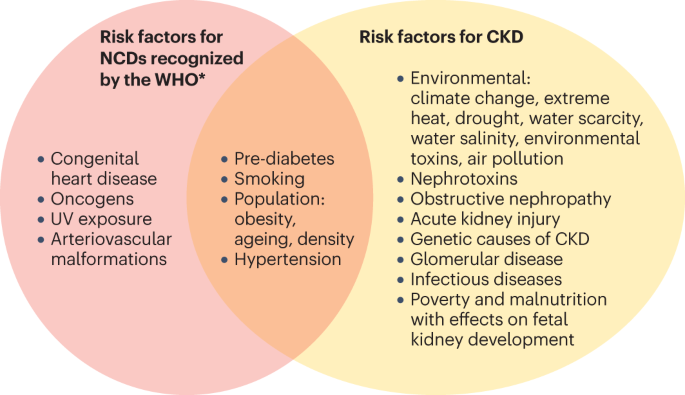
One of the most striking findings of the analysis is the sharp rise in CKD incidence among adolescents aged 14–19 years. This age group experienced an increase of more than 44% over the study period. Several factors may contribute to this trend, including improved diagnostic recognition, rising rates of hypertension and diabetes in youth, congenital kidney anomalies progressing with age, and environmental exposures.
Mortality and Disability – Inequality in Outcomes
Beyond incidence, the study evaluated mortality rates and disability-adjusted life years (DALYs), a measure that combines years of life lost due to premature death with years lived with disability. Mortality rates were strongly correlated with socioeconomic development. Lower-SDI regions experienced significantly higher CKD-related death rates compared to higher-income regions. This gap reflects disparities in early diagnosis, availability of specialist care, access to medications, and infrastructure for kidney replacement therapy.
Also read: Muthoot Finance MD Explains Flat Gold Tonnage, Loan Growth Outlook as Stock Slides
Long-Term Projections to 2050
Using a Bayesian Age-Period-Cohort modelling approach, researchers projected that global incidence rates may gradually decline by 2050. The ASIR is expected to fall to approximately 25.54 per 100,000 population.
However, the authors caution that improvements are unlikely to be evenly distributed without deliberate policy action. Historical patterns suggest that high-SDI regions will benefit first from advances in early detection and treatment, potentially widening disparities further if lower-income regions are left behind.
Policy Implications
The findings call for coordinated global action. Key priorities include:
- Expanding paediatric nephrology training and workforce capacity
- Increasing investment in dialysis and transplant infrastructure
- Integrating CKD screening into national child health programmes
- Strengthening universal health coverage to reduce financial barriers
- Supporting public education on kidney health
FAQs Of Rising Global Childhood CKD
1. What is chronic kidney disease (CKD) in children?
Chronic kidney disease in children is a long-term condition where the kidneys gradually lose their ability to filter waste and excess fluids from the blood. It can result from congenital abnormalities, infections, autoimmune disorders, or complications such as hypertension and diabetes.
2. Why is CKD increasing among adolescents?
The rise may be linked to better diagnosis, increasing rates of obesity, high blood pressure, diabetes, and environmental risk factors, along with congenital kidney conditions that worsen during teenage years.
3. What are DALYs, and why are they important?
Disability-Adjusted Life Years (DALYs) measure the overall disease burden, combining years lost due to early death and years lived with disability. They help policymakers understand the full impact of CKD beyond mortality alone.
Read about: Olympic Games Athletes Push Their Bodies to the Limit. Should We?
4. Why are lower-income regions more affected by CKD deaths?
Lower-SDI regions often face limited access to early screening, specialist care, dialysis, and kidney transplantation, leading to delayed treatment and higher mortality rates.
5. Can childhood CKD be prevented?
While not all cases are preventable, early detection, proper management of infections and blood pressure, good nutrition, and improved healthcare access can significantly reduce complications and improve outcomes.