






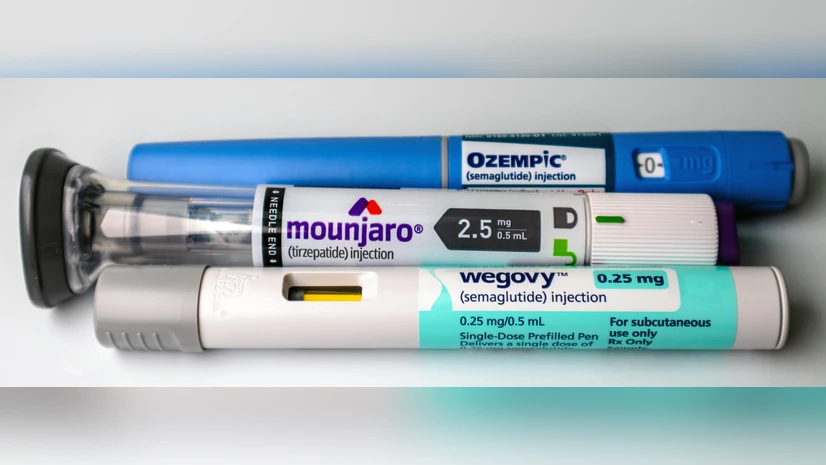
Weight Loss Drugs: In a major breakthrough that could redefine how metabolic liver disease is treated, new research has revealed that weight loss drugs such as semaglutide and tirzepatide may do more than just help patients shed pounds—they could also significantly improve liver health. The findings offer fresh hope for millions of people suffering from MASLD (Metabolic dysfunction-associated steatotic liver disease) and its more severe form, MASH (Metabolic dysfunction-associated steatohepatitis).
For years, managing these liver conditions relied almost exclusively on lifestyle changes, calorie restriction, and exercise, which, while effective for some, often proved insufficient for those with advanced liver damage. The search for a safe and sustainable pharmacological therapy has long been a challenge. Now, evidence from clinical trials is showing that anti-obesity medications—especially GLP-1 receptor agonists like semaglutide and the dual-action drug tirzepatide—may help reverse fat accumulation, inflammation, and fibrosis (scarring) in the liver.
Experts believe these medications could transform the treatment landscape for MASLD and MASH by addressing not just obesity but also the metabolic dysfunction that drives liver injury. However, while the data looks promising, researchers caution that longer-term studies and equitable access to these therapies are crucial before declaring them a universal solution.
Understanding MASLD and MASH
MASLD (Metabolic dysfunction-associated steatotic liver disease) is a condition characterized by excess fat buildup in liver cells, unrelated to alcohol consumption. When this fat accumulation leads to inflammation and liver cell injury, it progresses into MASH (Metabolic dysfunction-associated steatohepatitis). Over time, MASH can cause fibrosis (scarring), cirrhosis, and even liver failure.
According to global estimates, MASLD affects nearly one in four adults, often coexisting with obesity, diabetes, and high cholesterol. Until now, no drug has been officially approved for treating MASLD or MASH, leaving patients reliant on lifestyle modifications.
Traditional Treatment Approaches and Their Limitations
The cornerstone of MASLD and MASH management has traditionally been:
- Lifestyle modification (weight loss through diet and exercise)
- Control of blood sugar and lipids
- Bariatric surgery in severe cases
While weight loss can significantly improve liver health, achieving and maintaining it through lifestyle changes alone can be difficult. Many patients also experience limited liver improvement despite losing weight, highlighting the complex metabolic factors at play. This gap has led scientists to explore medications that can target both obesity and metabolic dysfunction, addressing the disease’s root cause.
What the New Evidence Shows
Semaglutide’s Role in Liver Health
Semaglutide, a GLP-1 receptor agonist, works by mimicking a natural hormone that regulates blood sugar and appetite. In people with MASLD, semaglutide reduces liver fat buildup, improves insulin sensitivity, and lowers inflammation.
Clinical trials have shown:
- Improved liver histology (tissue structure) after 48 weeks of therapy
- Significant reduction in ALT and AST (liver enzymes indicating damage)
- Partial reversal of steatohepatitis (liver inflammation)
- Reduced risk of fibrosis progression
In the Liraglutide Efficacy and Action in NASH trial, patients experienced disease resolution without worsening of scarring, demonstrating that GLP-1-based therapies could have direct benefits beyond weight loss.
Tirzepatide’s Dual-Action Benefits
Tirzepatide acts on both GLP-1 and GIP receptors, enhancing insulin action, appetite control, and fat metabolism. Studies show that tirzepatide:
- Reduces fat within the liver and around internal organs
- Improves fat distribution by shifting storage from visceral (harmful) to subcutaneous (less harmful) fat
- Promotes sustained weight loss while improving metabolic health markers
Emerging Therapies: Retatrutide
A newer compound, retatrutide, targets three receptors (GLP-1, GIP, and glucagon). Early trials report participants losing up to 24% of their body weight and showing improved liver fat metrics. However, research on its long-term safety and effect on fibrosis is still ongoing.
Read about: Does Your LDL or Bad Cholesterol Go Down When You Take Calcium Supplements?
Limitations and Challenges
Despite the encouraging results, there are several limitations:
- Short trial durations: Most studies span only 6–12 months.
- Incomplete long-term data: It’s unclear whether liver benefits persist after discontinuation.
- High discontinuation rates: Around 20–30% of patients stopped therapy due to side effects or high costs.
- Access inequality: The high price of these drugs limits their availability in low- and middle-income countries, where obesity and MASLD are most prevalent.
- Lack of biopsy-based endpoints: Many studies rely on imaging and biochemical markers rather than liver biopsies, the gold standard for diagnosis.
Global Health and Policy Implications
Researchers and health experts are calling for:
- Affordable pricing models for GLP-1 drugs
- Public health coverage for high-risk patients
- Early screening programs in populations with obesity and type 2 diabetes
- Education and awareness to promote metabolic health
These measures could ensure that the benefits of new therapies reach underserved regions, where MASLD is rising rapidly due to poor diet and sedentary lifestyles.
Implications for Clinical Practice
The growing evidence signals a shift in how doctors approach metabolic liver disease. Instead of relying solely on lifestyle changes or surgery, pharmacotherapy is emerging as a powerful tool to reverse liver damage. Experts suggest:
- Combination therapy (e.g., GLP-1 drugs with liver-targeted agents) could yield superior results.
- Lifestyle changes remain foundational, as medications work best when paired with healthy habits.
- Patients should be closely monitored for side effects and metabolic improvements.
Dr. Rakesh Gupta, Senior Consultant at Indraprastha Apollo Hospitals, emphasizes,
“These new drugs represent a significant leap forward, but they are not magic bullets. Weight management, diet, and exercise must continue alongside pharmacotherapy to ensure lasting liver health.”
Conclusion
The new evidence linking weight loss drugs to improved liver outcomes offers real optimism for patients with MASLD and MASH—conditions once thought to be irreversible. By targeting the root metabolic dysfunction, medications like semaglutide, tirzepatide, and retatrutide are redefining how we understand liver disease and its connection to obesity.
However, experts caution that long-term safety, cost-effectiveness, and accessibility must be thoroughly evaluated before these therapies become mainstream. For now, they should be considered as adjuncts—not replacements—to lifestyle and dietary measures.
If successfully integrated into clinical practice, these medications could dramatically reduce the global burden of metabolic liver disease. They represent not only progress in pharmacology but also a broader shift toward metabolically informed medicine, where treating the root cause becomes the ultimate goal.
The next decade of research will determine whether these drugs can fulfill their potential—not just as weight loss aids, but as lifesaving tools for liver health and longevity.
FAQs of Weight Loss Drugs
1. What are MASLD and MASH, and how are they different?
MASLD (Metabolic dysfunction-associated steatotic liver disease) is a buildup of fat in the liver linked to metabolic issues like obesity and diabetes. MASH (Metabolic dysfunction-associated steatohepatitis) is a more advanced stage involving inflammation, liver cell damage, and fibrosis (scarring). Without treatment, MASH can progress to cirrhosis and liver failure.
2. How do weight loss drugs like semaglutide and tirzepatide improve liver health?
These drugs work by reducing appetite, improving insulin sensitivity, and promoting fat loss, particularly in the liver and abdominal region. They also lower liver inflammation and may help reverse fibrosis, which leads to healthier liver function overall.
3. Are these medications approved for treating liver diseases?
Currently, semaglutide and tirzepatide are approved for treating obesity and type 2 diabetes, not specifically for liver diseases. However, multiple clinical trials are underway to evaluate their effectiveness for MASLD and MASH.
4. What are the risks or side effects of these drugs?
Common side effects include nausea, vomiting, constipation, and abdominal discomfort, especially when starting therapy. Some individuals may also experience gallbladder or gastrointestinal issues. These risks are generally outweighed by the potential benefits under medical supervision.
5. Will weight loss drugs replace diet and exercise in managing MASLD?
No. While these drugs are highly effective, lifestyle modification remains the cornerstone of liver health. Diet, regular exercise, and metabolic control amplify the benefits of medication and help maintain liver recovery over the long term.