





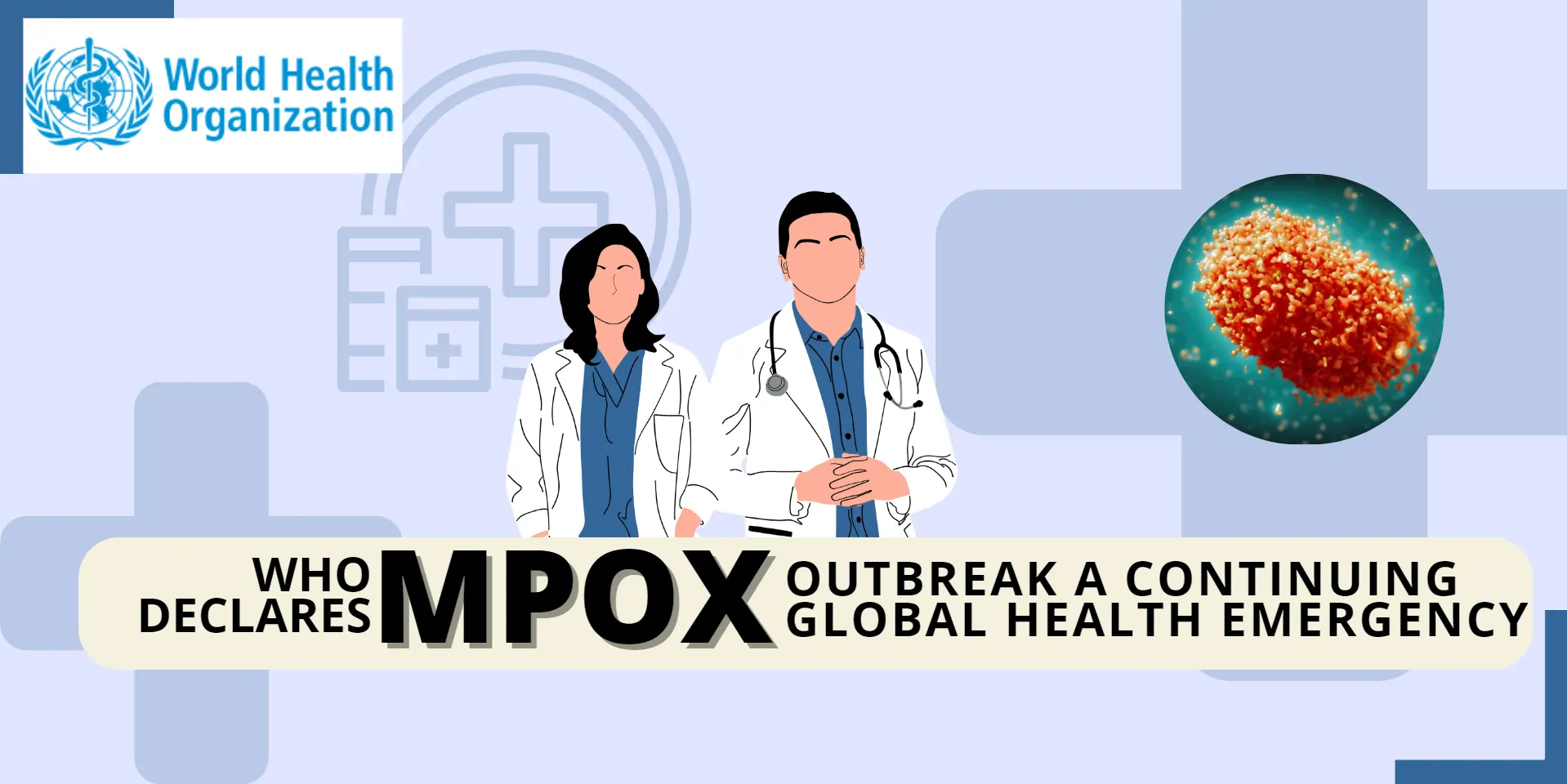
WHO Declares Mpox No Longer a Global Health Emergency: The World Health Organization (WHO) has officially announced that mpox is no longer considered a Public Health Emergency of International Concern (PHEIC). This decision, revealed by WHO Director-General Dr. Tedros Adhanom Ghebreyesus, comes after a sustained decline in cases worldwide, particularly in the Democratic Republic of Congo and several African nations.
Mpox, formerly known as monkeypox, is a viral infection that spreads primarily through close physical contact. The disease typically manifests with flu-like symptoms such as fever, fatigue, and body aches, followed by pus-filled skin lesions. While the virus has historically been endemic in certain African countries, outbreaks in recent years sparked international concern due to its cross-border spread.
This new declaration marks a turning point in global health response, as the disease no longer meets the criteria for the WHO’s highest level of alert. However, experts caution that vigilance and localized public health strategies remain essential to prevent resurgence.
Why WHO Downgraded the Mpox Emergency Status
Dr. Ghebreyesus explained that the decision was based on:
- Declining cases globally – Consistent reduction in new infections reported across affected countries.
- Improved outbreak control – Better containment and management in countries like the Democratic Republic of Congo, Burundi, Sierra Leone, and Uganda.
- Emergency Committee recommendation – The WHO’s Emergency Committee, which reviews outbreaks every three months, advised that mpox no longer poses an international public health threat.
The WHO had first declared mpox a global emergency in August 2022, after a new, fast-spreading form of the virus moved beyond the Congo into neighboring regions, raising international alarm.
What is Mpox?
Mpox is caused by the monkeypox virus, a relative of the smallpox virus. It spreads mainly through:
- Direct skin-to-skin or close contact with an infected person.
- Contact with contaminated objects like bedding, clothing, or surfaces.
- In rare cases, transmission from animals to humans.
Read about: Pancreatic Cancer: THIS Common Habit Puts Millions at Risk, Doctors Call for Screening as Cases Rise
Common Symptoms:
- Fever, chills, and headache
- Muscle aches and back pain
- Fatigue and swollen lymph nodes
- Pus-filled skin rashes and lesions
While most cases are mild, severe infections can occur in people with weakened immune systems.
Mpox Cases: The Global Decline
The decision to lift the global health emergency comes after evidence showed:
- Sustained decline in case numbers over several months.
- Containment of outbreaks in countries where the virus was spreading rapidly.
- Strengthened surveillance, vaccination, and awareness campaigns in affected regions.
This progress reflects how international collaboration and local interventions have helped curb transmission effectively.
What Happens Next?
Although mpox is no longer classified as a global emergency, the WHO has emphasized:
- Continued monitoring to prevent resurgence.
- Preparedness plans for countries at risk of outbreaks.
- Vaccination and awareness efforts in high-risk communities.
- Public caution to maintain hygiene and avoid unnecessary exposure.
The shift in classification does not mean the virus is eradicated—it signals that international risk has been reduced to a manageable level.
Conclusion
The WHO’s announcement marks a significant milestone in the fight against mpox. From being declared a global emergency in 2022 to now being downgraded due to reduced cases, this reflects major progress in controlling the viral infection.
Still, public health experts warn against complacency. Mpox has not disappeared, and outbreaks can still re-emerge if preventive measures are ignored. Countries must continue surveillance, vaccination drives, and education to keep the infection under control.
For individuals, awareness remains key. Recognizing symptoms early, avoiding close contact with infected individuals, and following health guidelines can play a critical role in stopping further spread.
As Dr. Ghebreyesus highlighted, the downgrade is not the end of mpox, but rather a step toward sustained global control—a reminder that collective action works in tackling emerging health threats.
Also read: Samsung Galaxy S25 Ultra 5G Price Drops to ₹1,10,999 on Flipkart Ahead of Big Billion Days Sale
FAQ on Mpox and WHO’s Announcement
1. Why did WHO declare that mpox is no longer a global emergency?
The WHO based its decision on sustained declines in cases across multiple countries, especially in Central and East Africa. Their Emergency Committee concluded that mpox no longer poses the same level of international threat as when it was declared a global emergency in 2022.
2. Does this mean mpox is completely gone?
No. Mpox has not been eradicated. It continues to exist in certain regions, but the risk of large-scale international spread has decreased significantly. Local outbreaks can still occur, so surveillance remains important.
3. What are the symptoms of mpox?
Symptoms include fever, chills, headache, swollen lymph nodes, muscle aches, and pus-filled skin rashes. Most cases are mild, but complications can arise in vulnerable populations.
4. How is mpox transmitted?
Mpox spreads mainly through close contact with infected individuals, contaminated objects, or in some cases, animal-to-human transmission. Direct skin contact is the most common way the virus spreads.
5. Should people still be worried about mpox?
While the international emergency has ended, individual caution is still important. People in high-risk areas should stay informed, practice good hygiene, and seek medical attention if they develop symptoms. Governments are encouraged to continue monitoring and preventive strategies.